
In brief:
- The VIN number appears in field E of the registration certificate: a unique 17-character code, excluding the letters I, O and Q.
- Under the ISO 3779 standard, it splits into three blocks: WMI (manufacturer), VDS (model) and VIS (individual serial number).
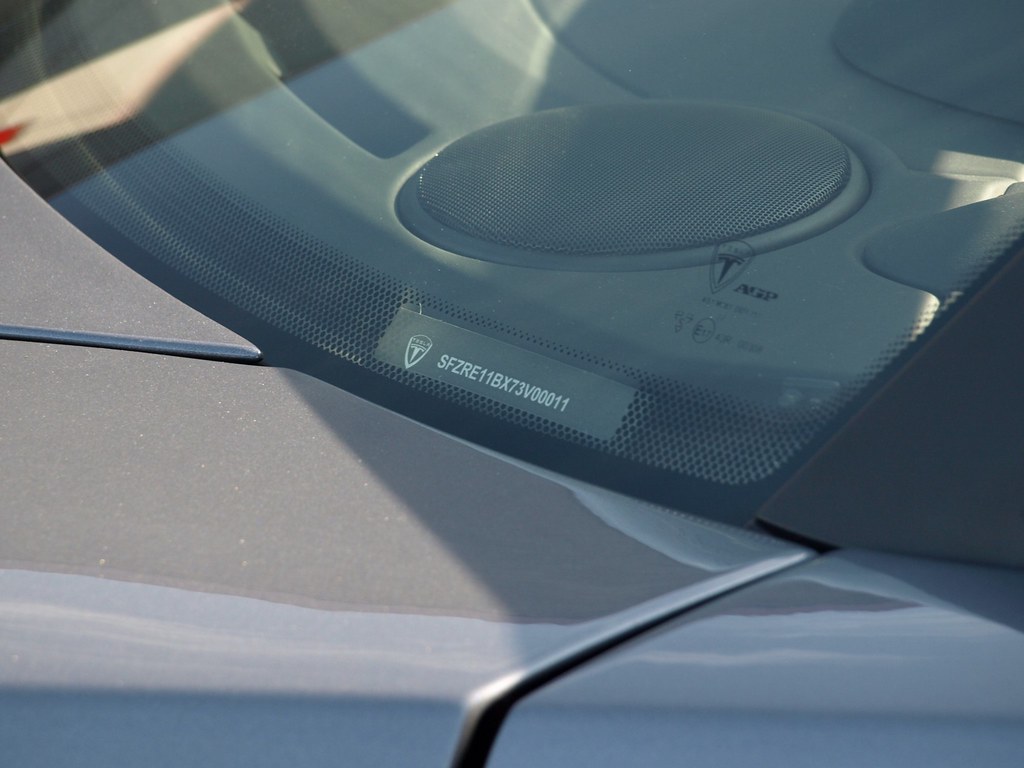
- On the vehicle, it is most often stamped at the bottom of the windshield, on a door pillar, or in the engine bay.
- It is used both for administrative procedures (ownership transfer, registration) and for fighting theft and the disguising of used vehicles.
The VIN number is one of the most frequently checked fields on a French vehicle registration certificate, alongside the plate number and the holder’s identity. Unlike those two pieces of information, which can change over the vehicle’s life, the VIN stays strictly identical from the moment it leaves the factory until the vehicle is scrapped. It is precisely this permanence that makes it the ultimate reference for identifying a vehicle, whether for a used car purchase, an insurance declaration, or a search following a theft.
The VIN number at a glance
| Feature | Detail |
|---|---|
| Official name | Vehicle Identification Number (VIN) |
| Location on the certificate | Field E, near the top of the document |
| Length | 17 alphanumeric characters |
| Excluded characters | The letters I, O and Q (risk of confusion with 1 and 0) |
| Structure | WMI (3 char.) + VDS (6 char.) + VIS (8 char., last 4 digits are the serial number) |
| Applicable standard | ISO 3779 (VIN structure) and ISO 3780 (manufacturer WMI codes) |
| Locations on the vehicle | Bottom of windshield, door pillar, engine bay, chassis |
| Common uses | Ownership transfer, registration, insurance, technical inspection, theft reports, importation |
This table sums up the essentials; the sections below detail the code’s structure, its physical locations and its practical uses.
What the VIN number is, and why it is unique
The VIN number, or vehicle identification number, is the individual code assigned by the manufacturer to every vehicle produced worldwide. On the French registration certificate, this code appears in field E, a field harmonized at European level that carries the same name and the same position in every EU country, as detailed in the guide to reading a French vehicle registration certificate.
What sets the VIN apart from the certificate’s other fields is its permanence: it stays identical no matter how many times the vehicle changes owner, how many address changes occur, or how many times the document is reissued. A vehicle keeps the same VIN from its first registration until it is scrapped, which makes it the reference identifier for any administrative or legal search concerning it.
An international system, not a French invention
The idea of a unique chassis number dates back to the mid-20th century, but it is international standardization that imposed today’s 17-character format, now used by nearly every car manufacturer worldwide, whether selling in France, the United States or Asia.
How a 17-character VIN number is built
The VIN’s structure is not arbitrary: it follows the international ISO 3779 standard, complemented by ISO 3780 for the assignment of manufacturer codes. This framework guarantees that, in theory, the same VIN can never be assigned to two different vehicles anywhere in the world.
The three blocks of the code
- WMI (World Manufacturer Identifier), the first 3 characters: they identify the manufacturer and the country of assembly. Two vehicles from different brands never share the same WMI
- VDS (Vehicle Descriptor Section), the next 6 characters: they describe the vehicle’s general features, such as model, body type or powertrain, following a logic specific to each manufacturer
- VIS (Vehicle Indicator Section), the last 8 characters: this section generally includes the model year and the production plant, followed by an individual serial number in the last 4 digits, which guarantees the vehicle’s uniqueness within a given series
By convention, the letters I, O and Q are excluded from any VIN, to avoid confusion with the digits 1 and 0 when read. A VIN containing one of these three letters is therefore necessarily a transcription error or an anomaly worth checking.
A requirement rooted in French regulation
France has required the vehicle identification number to be stated since the modern registration system was introduced. The regulatory text that governs today’s registration certificate states this explicitly, even for the simplest of files:
“[The document must include] at least the category, make, type and vehicle identification number.” (Arrêté du 9 février 2009 relatif aux modalités d’immatriculation des véhicules, the French decree on registration procedures, Légifrance, 2009)
This requirement illustrates the VIN’s special status: while other information can be missing or approximate on an incomplete file, the vehicle identification number remains a non-negotiable prerequisite for any procedure.
Where to find the VIN number on the physical vehicle
Beyond the registration certificate, the VIN is stamped or affixed directly on the vehicle, at one or more locations depending on the manufacturer and model:
- On a label at the bottom of the windshield, on the driver’s side, visible from outside without opening the vehicle: the simplest spot to check quickly
- On the driver’s door pillar or its frame, often on a metal plate or a manufacturer sticker
- In the engine bay, on a riveted or glued manufacturer plate, sometimes alongside other technical data (weight, type, powertrain)
- Cold-stamped directly on the chassis, a permanent marking that cannot be removed without leaving a visible trace
Why compare these locations before a purchase
Before signing for a used car, comparing the VIN stated in field E of the registration certificate with the one visible on the windshield or in the engine bay is a quick and simple check. A mismatch between the two, a plate that looks like it has been removed, or a chassis stamp that appears altered are all red flags that should lead a buyer to walk away or demand an explanation. This check usefully complements the points listed in the checklist before buying a used car.
What the VIN number is actually used for
The VIN is not just an administrative detail: it comes into play in most procedures involving the vehicle, as well as in preventing and prosecuting theft.
Procedures throughout the vehicle’s life
During a vehicle registration transfer, the VIN is used to verify that the vehicle declared by the seller exactly matches the one stated on the transfer certificate. It is also requested when taking out insurance, when checking a vehicle’s history, or during an import procedure, to confirm that the vehicle meets French technical and environmental standards.
Correcting a VIN on a registration certificate, while rare, can be necessary after a data entry error made during an earlier registration. This correction is handled directly on the official registration agency’s website, or can be entrusted to a provider authorized by the Ministry of the Interior such as Cartegrise.com, which checks the file’s consistency before submission.
Fighting theft and fraud
In the event of theft, the VIN is the central element that allows law enforcement to identify a vehicle, even after its plates have been swapped. Theft reports feed databases accessible to law enforcement, both nationally and at European level through the Schengen Information System, which makes it possible to trace a stolen vehicle even after it has been moved to another EU country.
The VIN is also what allows investigators to detect a vehicle rebuilt from several wrecks, a fraudulent practice that consists of assembling parts from several crashed vehicles under a single falsified identity. Checking the consistency between the declared VIN and the vehicle’s actual features (powertrain, year, equipment) often reveals this kind of reconstruction.
What to do if there is an anomaly with the VIN number
Several situations deserve a closer look before continuing with a procedure or a purchase:
- The VIN on the registration certificate does not match the one on the vehicle: any transaction should be suspended immediately and the anomaly reported, as it may reveal fraud or an administrative error
- A forbidden letter (I, O or Q) appears in the code: this is almost always a transcription error that needs correcting through the official registration agency or an authorized provider
- The plate or the stamped number looks like it has been removed or altered: this signal should lead to walking away from the purchase, unless the seller provides a clear technical explanation
- The VIN is completely unreadable on the vehicle (corrosion, accident damage, wear): a technical assessment may be needed before any ownership transfer procedure
Frequently asked questions
Where do you find the VIN number on a French vehicle registration certificate?
The VIN number appears in field E of the registration certificate, near the top of the document. It is a unique 17-character code, excluding the letters I, O and Q, which must be strictly identical to the one stamped on the vehicle. On the vehicle itself, it is most often found on a label at the bottom of the windshield on the driver’s side, on a door pillar, or stamped into the engine bay.
How is a 17-character VIN number structured?
The VIN splits into three blocks under ISO 3779: the first 3 characters form the WMI (World Manufacturer Identifier), the next 6 form the VDS (Vehicle Descriptor Section, model and powertrain), and the last 8 form the VIS (Vehicle Indicator Section), whose last 4 digits make up the individual serial number.
Why check the VIN number before buying a used car?
Comparing the VIN on the registration certificate with the one stamped on the vehicle helps detect a car with a disguised identity, one rebuilt from several wrecks, or one whose records have been tampered with. Any mismatch between the two, or any sign of tampering on the plate or the stamped number, should raise a red flag before signing anything.
Are the VIN number and the document's serial number the same thing?
No. The VIN (field E) identifies the vehicle itself on a permanent basis, while the certificate’s own serial number is specific to each issued document and changes every time the certificate is reissued. Both appear on the registration certificate but serve different administrative purposes.
What should you do if the VIN number is unreadable or wrong on the registration certificate?
A registration certificate carrying an incorrect VIN, or a vehicle with an unreadable stamped number, must be corrected before any ownership transfer. The correction is handled on the official registration agency’s website, or through a provider authorized by the Ministry of the Interior, backed by a technical document from the manufacturer or an approved inspector.