
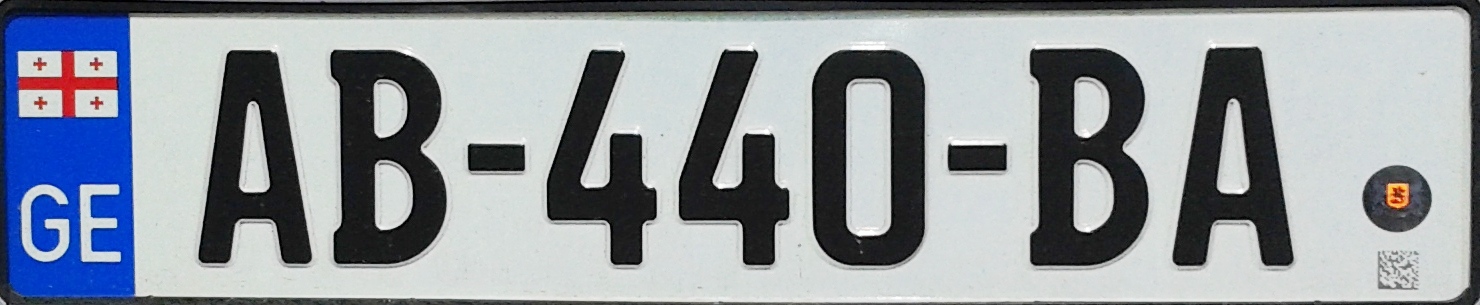
In brief:
- The registration certificate contains around thirty fields, each identified by a letter printed in small type under the corresponding value.
- Most fields (A, B, C, D, E, F, G, P, S, U, V) are harmonized at European level under Directive 1999/37/EC, which makes them identical across the whole EU.
- Other fields such as P.6 (fiscal horsepower), taxes Y.1 to Y.6, or field Z are additions specific to the French document, with no direct equivalent in other EU countries.
- Three fields cover most day to day needs: A (registration number), C.1 (holder) and E (VIN number), useful for any procedure or check before a purchase.
The full table of registration certificate fields
This table brings together the most consulted fields on the registration certificate, grouped by theme. It works as a quick reference before each category is detailed further below.
| Field | Official name | What it actually shows |
|---|---|---|
| A | Registration number | Format AA-123-AA (SIV), identical on the plates |
| B | Date of first registration | Initial date the vehicle was put into circulation |
| C.1 | Certificate holder | Name or company name of the holder |
| C.3 | Holder’s address | Address that receives mail and traffic fine notices |
| D.1 / D.2 / D.3 | Make, type, commercial description | Commercial identification of the model |
| E | Vehicle identification number (VIN) | Unique 17-character code stamped on the vehicle |
| F.1 | Maximum technically permissible laden mass | Maximum mass allowed by design |
| F.2 | Laden mass of the vehicle in service | Maximum mass authorized for use in France |
| F.3 | Maximum permissible laden mass of the whole vehicle | Maximum mass with a trailer attached |
| G | National mass in service | Mass of the vehicle ready to drive, without passengers or load |
| J.1 | National category | French administrative category (passenger car, van, taxi…) |
| P.1 / P.2 / P.3 | Capacity, net power, fuel | Engine characteristics |
| P.6 | Administrative power | Fiscal horsepower (CV), the basis for the regional tax |
| S.1 / S.2 | Seated / standing places | Number of approved places |
| V.7 / V.9 | CO2 and environmental class | Emissions in g/km and Euro standard / Crit’Air class |
| X.1 | Technical inspection | Validity date of the last inspection |
| Y.1 to Y.6 | Taxes | Breakdown, then total amount due |
| Z | Special mentions | Classic status, lien, special purpose vehicle, seizure… |
Fields A, C.1 and E are the ones that come up most often in everyday procedures: transferring ownership, declaring a vehicle to an insurer, or checking a used vehicle before buying it.
A document standardized at European level, with French additions
The registration certificate is not a purely national invention. Its overall structure comes from Directive 1999/37/EC of the Council of the European Union, which requires every member state to include a common set of harmonized fields, identified by the same letters across the whole Union: the registration number (A), the date of first registration (B), the holder’s identity (C.1), the vehicle’s data (D, E), its mass (F, G), its engine characteristics (P.1, P.2, P.3) and its capacity (S.1, S.2).
On top of this European baseline, France has added its own national fields, which have no automatic equivalent in other EU countries: administrative power in fiscal horsepower (P.6), the national category (J.1), the technical inspection validity date (X.1), the tax breakdown (Y.1 to Y.6), and the special mentions (Z). This mix explains why a French certificate carries more fields than a German or Spanish certificate for an equivalent vehicle.
According to the regulatory text that governs the document in France:
“The registration certificate […] consists of a single part” and “the list of fields shown on the registration certificate appears in Annex III of this order” (Order of 9 February 2009 on vehicle registration procedures, article 2, Légifrance).
It is this Annex III that sets out, letter by letter, the official list of fields every French certificate must include.
Identifying the vehicle and its holder: fields A to E
These five letters cover most of the information requested during an insurance claim, a new policy application, or a roadside check.
Registration number and date (A, B)
Field A is the vehicle’s registration number, in the AA-123-AA format used since the registration system (SIV) became standard in 2009. Unlike the previous system, this number is assigned to the vehicle for life and no longer changes if the owner moves or the vehicle is resold. Field B shows the date of first registration, used as the reference point to calculate the vehicle’s age and the deadline for its first technical inspection.
The holder and their address (C.1, C.3)
Field C.1 carries the name or company name of the certificate holder. Field C.3 contains their address, the one that receives both administrative mail and traffic fine notices issued after a speed camera reading or a roadside check. In the case of long term leasing or a finance lease, a separate mention identifies the lessee while keeping the original holder on record, usually the finance company.
The VIN number (E)
Field E is the vehicle identification number, better known by its acronym VIN. This 17-character code, stamped directly on the chassis, must be strictly identical to the one printed on the certificate: any mismatch between the two is a strong warning sign before buying a used vehicle, potentially pointing to a tampered or non-compliant vehicle.
Technical characteristics and vehicle mass
These fields mostly matter to maintenance professionals, insurers, and drivers planning a tow hitch or a modification.
Engine and fuel (P.1, P.2, P.3, P.6)
- P.1 shows engine capacity, in cm3
- P.2 gives the maximum net power in kilowatts (kW), the actual physical output of the engine
- P.3 states the fuel type or power source (petrol, diesel, electric, hybrid)
- P.6 is the administrative power, expressed in fiscal horsepower (CV), used as the basis for the regional tax due on every change of holder
These last two values are often confused: P.2 measures the engine’s real power, while P.6 is a fiscal value calculated from an administrative scale, without a direct proportional link to the power in kilowatts.
Mass and dimensions (F.1, F.2, F.3, G)
Three separate fields cover the vehicle’s mass: F.1 is the maximum technically permissible laden mass as defined by the manufacturer, F.2 is the maximum mass actually authorized for use in France (often identical to F.1, but sometimes lower), and F.3 adds the weight of any trailer attached, as the maximum permissible laden mass of the whole vehicle. Field G shows the national mass in service, meaning the vehicle’s mass ready to drive, without passengers or load.
Environment and technical inspection: fields V and X
Two sets of fields cover the vehicle’s environmental impact and its regulatory follow-up.
Emissions and environmental class (V.7, V.9)
Field V.7 shows carbon dioxide emissions in grams per kilometer, a figure that was used as the basis for calculating the ecological penalty when the vehicle was bought new. Field V.9 states the European environmental type-approval standard (Euro standard), a piece of information separate from the Crit’Air sticker, which is calculated separately from the engine type and the year the vehicle was put into circulation.
Technical inspection (X.1)
Field X.1 carries the validity date of the last technical inspection. This field is only updated on the document when the certificate is reissued (change of holder, change of address, or duplicate): day to day, it is the sticker displayed on the windshield, not the registration certificate itself, that is used to check the deadline for the car’s technical inspection.
Taxes and special mentions (Y and Z)
The last set of fields covers the financial side and any special circumstances affecting the vehicle.
The breakdown of the tax due (Y.1 to Y.6)
Fields Y.1 to Y.5 break down the tax paid on every new registration: regional tax calculated from the fiscal horsepower (P.6), any additional tax, then the delivery fee for the document. Field Y.6 shows the total amount actually paid. The full breakdown of the calculation, including the regional rate per fiscal horsepower, is covered in a dedicated article on how much a vehicle registration costs in 2026.
Special mentions (Z)
Field Z groups together every note that does not fit any other standard field: classic vehicle status (over 30 years old), restrictions on special purpose vehicles, an ongoing administrative opposition or lien on the vehicle. A filled in field Z before a used vehicle purchase requires checking exactly what it means before signing, since some mentions can block a future transfer of the vehicle registration.
Checking your certificate before a purchase or a procedure
Beyond simply reading it, a few practical checks avoid complications later on.
- Compare the VIN number (E) printed on the certificate with the one stamped on the chassis and visible on the windshield, before signing anything
- Check field Z, often overlooked, to spot a lien or an opposition that would block a future transfer of the vehicle registration
- Confirm that the address in C.3 matches the seller’s actual address, to make sure no registration address change was left undone
- Compare the fiscal horsepower (P.6) with the figure used by the insurer to avoid a mismatch in the future policy
If a correction or an update turns out to be needed, it can be requested directly on the official agency’s website (ANTS), or handed to a provider authorized by the Ministry of the Interior such as Cartegrise.com, which checks the file for consistency before submission.
Frequently asked questions
How do you read a French vehicle registration certificate and understand all its fields?
Every box on the registration certificate corresponds to a field identified by a letter: A for the registration number, B for the date of first registration, C.1 for the holder, E for the VIN number, P.3 and P.6 for fuel type and fiscal horsepower, and V.7 for CO2 emissions. Most of these fields are harmonized at European level under Directive 1999/37/EC, while others (P.6, taxes Y.1 to Y.6, or field Z) are additions specific to the French document.
What does field A mean on a vehicle registration certificate?
Field A is the vehicle’s registration number, in the AA-123-AA format used since France’s registration system (SIV) was rolled out in 2009. This number is assigned to the vehicle for life and must be strictly identical on the plates and on the certificate.
How do you find out who the holder of a vehicle registration certificate is?
The holder’s name and address appear in fields C.1 and C.3 of the certificate. In the case of long term leasing or a finance lease, a separate field names the lessee while keeping the original holder on record. It is the address in C.3 that receives traffic fine notices.
Where do you find the fiscal horsepower on a vehicle registration certificate?
Fiscal horsepower, expressed in administrative units (CV), appears in field P.6. It is used as the basis for the regional tax, and should not be confused with the engine’s actual power in kilowatts, shown in field P.2.
What does field Z mean on a vehicle registration certificate?
Field Z groups together the special mentions specific to the French document: classic vehicle status, restrictions on special purpose vehicles, an ongoing administrative lien or seizure, or any other note that does not fit any other standard field. A filled in field Z always deserves a careful check before buying a used vehicle.